वर्चुअल मशीन बनाने का तरीका (2022)
(jmeiners.com)- कंप्यूटर के अंदरूनी कामकाज और programming language execution को समझने के लिए, LC-3 educational architecture पर assembly programs चलाने वाली लगभग 250 lines की C-based VM खुद implement की गई
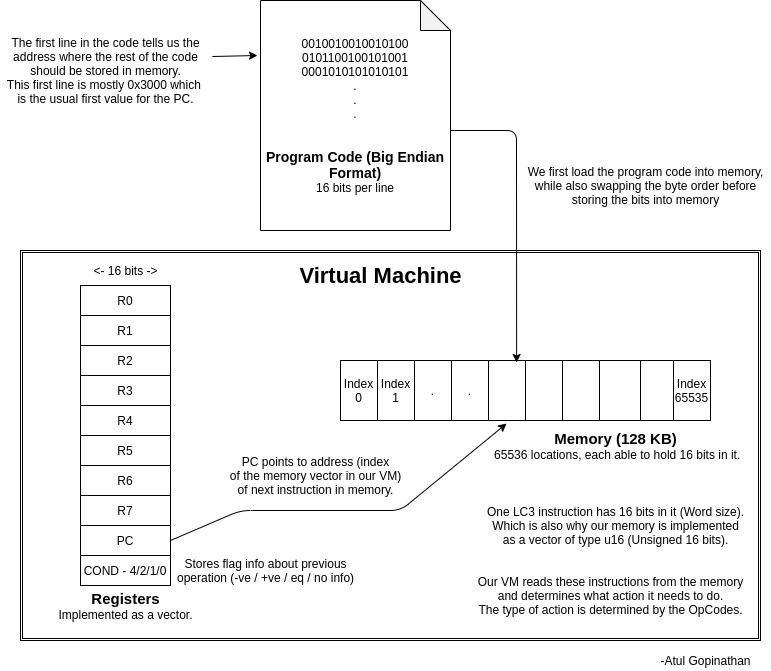
- implementation target एक छोटा computer model है जिसमें 65,536 16-bit memory locations, 10 registers, 16 opcodes, condition flags, trap routines, और memory-mapped registers हैं
- execution loop
PCद्वारा point की गई instruction को read और increment करता है, फिर opcode interpret करकेADD,LDI,BR,JMP,TRAPजैसी instructions execute करता है; यह fetch-decode-execute structure में काम करता है - program loading object file के पहले 16-bit origin को पढ़कर उसे memory में place करता है, और LC-3 के big-endian format को ज़्यादातर modern computers में इस्तेमाल होने वाले little-endian format के अनुसार byte-swap करता है
- keyboard input और console output trap routines और
KBSR/KBDRmemory-mapped registers से handle होते हैं, और Unix/macOS व Windows के लिए अलग-अलग terminal input buffering code चाहिए
ट्यूटोरियल का लक्ष्य और पूर्वधारणाएँ
- LC-3 virtual machine खुद implement करके assembly language programs execute करने की प्रक्रिया को follow करता है
- final code C के आधार पर लगभग 250 lines का है, और Unix के लिए
lc3.cतथा Windows के लिएlc3-win.cदिए गए हैं - जरूरी prior knowledge basic C या C++ पढ़ना और binary arithmetic है
- पूरा code GitHub repo में है, और tutorial खुद literate program format में है, यानी code blocks को जोड़कर final source बनाया जाता है
Virtual machine क्या करती है
- VM ऐसा program है जो CPU और कुछ hardware components की तरह काम करता है
- arithmetic operations करती है
- memory पढ़ती और लिखती है
- I/O devices से interact करती है
- अपनी machine language समझकर programs execute करती है
- VM के purpose के अनुसार यह actual hardware को faithfully reproduce कर सकती है, या software development की सुविधा के लिए नया virtual architecture दे सकती है
- JVM standard execution platform देने वाली VM का prominent example है, और जिन devices पर JVM implement है, वहाँ Java, Kotlin, Clojure programs बिना modification चल सकते हैं
- isolated execution भी VM का important use है
- garbage collection में VM running program के बाहर से stack और memory references observe कर सकती है
- Ethereum smart contracts ऐसी VM के अंदर execute होते हैं जिसे file system, network, disk आदि तक access नहीं होता
LC-3 architecture की संरचना
- implementation target LC-3 है, जिसका इस्तेमाल university computer architecture और assembly education में होता है
- LC-3 memory में 65,536 locations होते हैं, और हर location 16-bit value store करता है
- total storage capacity 128KB है
- C implementation में इसे
uint16_t memory[MEMORY_MAX]array से represent किया जाता है
- registers कुल 10 हैं
R0~R7: 8 general-purpose registersPC: अगली execute होने वाली instruction का memory addressCOND: पिछली calculation result का condition flag
- LC-3 instructions सभी 16-bit होती हैं, और left 4 bits opcode होते हैं
- 16 opcodes define किए गए हैं
- इनमें
OP_BR,OP_ADD,OP_LD,OP_ST,OP_JSR,OP_AND,OP_LDR,OP_STR,OP_RTI,OP_NOT,OP_LDI,OP_STI,OP_JMP,OP_RES,OP_LEA,OP_TRAPशामिल हैं
- condition flags पिछली calculation result का sign बताते हैं
FL_POS: positiveFL_ZRO: 0FL_NEG: negative
Assembly और machine language
- LC-3 VM असल में human-readable assembly नहीं, बल्कि 16-bit machine instruction array execute करती है
- assembler text में लिखी LC-3 assembly को 16-bit binary instructions में convert करता है
Hello Worldexample का flow इस प्रकार है.ORIG x3000: program load होने वाला memory address specify करता हैLEA R0, HELLO_STR: string address कोR0में load करता हैPUTS:R0जिस string को point करता है उसे output करता हैHALT: program रोकता है.STRINGZ "Hello World!": string data को program के अंदर store करता है
.ORIG,.STRINGZCPU instructions नहीं, बल्कि assembler directives हैं- conditions और loops
BRn LOOPजैसीgotoके करीब branch instructions से implement होते हैं
Execution loop की core procedure
- VM execution वही procedure repeat करता है
PCregister address से instruction पढ़ता हैPCincrement करता है- instruction के upper 4 bits से opcode निकालता है
- opcode के अनुसार implementation code execute करता है
- फिर अगली instruction पढ़ता है
- default start address
0x3000है - कुछ instructions
PCको सीधे बदलकर execution flow jump कराती हैं- branch और jump instructions की वजह से केवल
PCincrement करने वाले structure में भी loops और conditional execution possible हैं
- branch और jump instructions की वजह से केवल
mainloopswitch (op)से opcode-wise handling code call करता हैOP_ADD,OP_AND,OP_NOT,OP_BR,OP_JMP,OP_JSR,OP_LD,OP_LDI,OP_LDR,OP_LEA,OP_ST,OP_STI,OP_STR,OP_TRAPhandle करता हैOP_RES,OP_RTIunused opcodes हैं और इन्हेंabort()से handle किया जा सकता है
Instructions implement करने का तरीका
ADDदो values जोड़कर destination register में store करता है और condition flags update करता हैADDके दो modes हैं- register mode: दूसरा operand किसी दूसरे register से पढ़ता है
- immediate mode: दूसरा operand instruction के lower 5 bits
imm5से पढ़ता है
imm5जैसी 16-bit से छोटी values को sign extension के जरिए 16-bit value में extend करना होता है- positive values 0 से fill होती हैं
- negative values 1 से fill होती हैं ताकि original value preserve रहे
- register में value लिखने वाली instructions
update_flagsसेR_CONDupdate करती हैं- value 0 हो तो
FL_ZRO - most significant bit 1 हो तो
FL_NEG - बाकी cases में
FL_POS
- value 0 हो तो
LDI“load indirect” instruction है- instruction के
PCoffset9को sign-extend करता है - current
PCमें जोड़कर memory address निकालता है - उस location में stored value को फिर address की तरह इस्तेमाल करके final data पढ़ता है
- read value को destination register में store करता है और condition flags update करता है
- instruction के
मुख्य instruction set
- arithmetic और bit operations
ADD: additionAND: bitwise ANDNOT: bitwise NOT
- control flow
BR: condition flags और instruction के condition bits compare करकेPCmove करता हैJMP: specified register value कोPCके रूप में set करता हैRET: specification में अलग keyword है, लेकिनJMPका special case हैJSR,JSRR: currentPCकोR7में store करके subroutine location पर jump करता है
- memory read
LD:PC-relative offset address से read करता हैLDI: indirect address को एक बार और follow करके read करता हैLDR: base register और offset से calculated address से read करता हैLEA: effective address खुद register में store करता है
- memory write
ST:PC-relative offset address में store करता हैSTI: indirect address follow करके store करता हैSTR: base register और offset से calculated address में store करता है
Trap routine और I/O
- LC-3 common tasks और I/O device access के लिए trap routines provide करता है
- trap routines को LC-3 के operating system या API की तरह देखा जा सकता है
- trap codes इस तरह define किए गए हैं
TRAP_GETC = 0x20: keyboard से character input, terminal में echo नहीं करताTRAP_OUT = 0x21: character outputTRAP_PUTS = 0x22: word string outputTRAP_IN = 0x23: character input के बाद terminal में echoTRAP_PUTSP = 0x24: byte string outputTRAP_HALT = 0x25: program stop
- official LC-3 simulator में trap routines assembly में लिखे जाते हैं, लेकिन इस VM में इन्हें C functions से implement किया गया है
PUTSR0में stored address से शुरू करकेx0000मिलने तक characters output करता है- LC-3 strings C strings की तरह 1-byte units में नहीं, बल्कि एक memory location में एक character store करती हैं
- हर memory location 16-bit की होती है, इसलिए C output के समय
charमें convert करके output करता है
HALTtrap"HALT"output करता है और execution flag को 0 में बदलकर VM loop समाप्त करता है
Program image loading
- LC-3 assembly program को machine language में convert करने पर instructions और data array वाली file बनती है
- object file के पहले 16 bits बताते हैं कि program को memory में कहाँ रखना है; यह origin है
- loader पहले origin पढ़ता है, फिर बाकी data को origin address से memory में copy करता है
- LC-3 programs big-endian format में होते हैं
- ज्यादातर modern computers little-endian होते हैं, इसलिए loaded हर
uint16_tपरswap16apply किया जाता है - पुराने PPC Mac जैसे big-endian computers में swap नहीं करना चाहिए
- ज्यादातर modern computers little-endian होते हैं, इसलिए loaded हर
read_imagefile को binary mode में खोलता है,read_image_filecall करता है, फिर file close करता है
Memory-mapped registers
- special registers जिन्हें general register table से access नहीं किया जाता, वे specific memory addresses पर mapped होते हैं
- LC-3 में implement करने वाले memory-mapped registers दो हैं
MR_KBSR = 0xFE00: keyboard status registerMR_KBDR = 0xFE02: keyboard data register
KBSRबताता है कि key press हुई है या नहीं, औरKBDRstore करता है कि कौन-सी key press हुईGETCinput आने तक execution block करता है, लेकिनKBSRऔरKBDRdevice state polling करके program को input wait के दौरान भी responsive रहने देते हैं- memory read direct array पढ़कर नहीं, बल्कि
mem_readसे होता है- address
MR_KBSRहो तोcheck_key()से keyboard state check करता है - key हो तो
KBSRका most significant bit set करता है औरKBDRमेंgetchar()value store करता है - key न हो तो
KBSRको 0 set करता है
- address
Platform-specific terminal handling
- keyboard input और terminal behavior ठीक से handle करने के लिए platform-specific input buffering settings चाहिए
- Linux/macOS/UNIX implementation
termios,selectआदि use करता है- canonical mode और echo disable करता है
selectसे input available है या नहीं check करता है
- Windows implementation
GetStdHandle,GetConsoleMode,SetConsoleMode,_kbhitआदि use करता है- echo और line input adjust करता है
WaitForSingleObjectऔर_kbhitसे key input check करता है
- program start पर
disable_input_buffering()call किया जाता है, और exit परrestore_input_buffering()call किया जाता है SIGINTमिलने पर terminal settings restore करता है, newline output करता है, फिर exit करता है
VM execution और debugging
- VM build example इस प्रकार है
gcc lc3.c -o lc3-vm
- execute करने के लिए assembled LC-3 object file को argument के रूप में pass करें
lc3-vm path/to/2048.obj
- examples में दिए object files
2048.objऔरrogue.objहैं - 2048 example WASD keys से operate होता है
- program सही से काम न करे तो instruction implementation error होने की संभावना ज्यादा है
- LC-3 assembly source पढ़ते हुए debugger से VM instructions को step-by-step execute करना recommended है
- अगर कोई point expected instruction पर move नहीं करता, तो उस instruction की specification और implementation फिर से check करें
Optional: C++ generics-based implementation
- shorter C++ implementation technique भी optional रूप में cover की गई है
- कई instructions sign extension,
PC-relative offset, indirect address calculation जैसे repeated tasks share करती हैं, इसलिए instruction execution को छोटे processing stages की pipeline की तरह देखा जा सकता है - C++ templates और bit flags का इस्तेमाल करके opcode-wise सिर्फ जरूरी processing stages compile time पर include किए जाते हैं
- यह तरीका code duplication कम करता है, और हर processing stage के chip में physical space लेने वाली real hardware wiring style के ज्यादा करीब है
- idea source के रूप में Bisqwit’s NES emulator का उल्लेख है
Resources और contributions
- atul-g ने पूरे system behavior का summary देने वाला reference card contribute किया
- अलग-अलग language implementations GitHub topic
lc3में organized हैं- C, C++, Go, Haskell, Java, JavaScript, Kotlin, Lua, OCaml, Python, Ruby, Rust, Swift, TypeScript, Zig आदि शामिल हैं
- अपनी implementation को list में दिखाना हो तो GitHub topic
lc3attach कर दें - Windows platform support inkydragon ने contribute किया
- project में integration tests से जुड़ा good first issue है
1 टिप्पणियां
Hacker News की टिप्पणियां
किशोर उम्र में community college की computer science intro class में मैंने एक सरल CPU instruction set design किया था, और खुद virtual machine और assembler बनाकर assembly programs लिखे और चलाकर देखे थे
यह हैरानी की हद तक आसान था, और कंप्यूटर बहुत कम रहस्यमय लगने लगा
FPGA के लिए असली CPU design से लेकर एक सरल operating system और उसके ऊपर चलने वाले programs लिखने तक, लगता है इस तरीके से computing की सभी layers सीखी जा सकती हैं
अगर आधुनिक computing की performance और security जरूरतों को छोड़कर लक्ष्य सिर्फ “चलना चाहिए” हो, तो यह क्षेत्र आश्चर्यजनक रूप से सरल है
अगर मुझे सही याद है, तो कम-से-कम memory segmentation, protected mode और MMU शामिल हो जाते हैं
वह PDP पर BASIC में लिखा गया एक simple computer/assembler था, और assignments में से एक था loop से addition करके simple multiplication implement करना
मेरे दोस्त ने इसकी बजाय program में बदलाव करके एक नया MUL instruction बना दिया, और teacher को यह बिल्कुल पसंद नहीं आया
जिज्ञासु और सीखने के इच्छुक लोग ऐसी basic layers आसानी से सीख सकते हैं, लेकिन जो लोग “जल्दी पैसा कमाना और जितनी जल्दी हो सके नौकरी के काबिल बनना” चाहते हैं, उनके लिए ऐसा नहीं है
सुझाई गई किताबें:
अगर इन किताबों को पढ़ चुके लोग comments जोड़ें, तो सबके लिए मददगार होगा
Nintendo emulator, VT-x इस्तेमाल करने वाला hypervisor, traditional multitasking operating system, नई scripting language का interpreter, SQL query optimizer, regex matcher, game server में untrusted player code चलाने वाला security monitor वगैरह के considerations लगभग overlap नहीं करते दिखते, लेकिन ये सब virtual machines हैं
character-cell terminal escape sequences specify करने वाले terminfo format के अंदर भी stack-based virtual machine है
गहराई से देखें तो आज के अर्थ में कंप्यूटर को कंप्यूटर जैसा बनाने वाली चीज virtual machine ही है, और Turing का 1936 का Entscheidungsproblem paper भी इस बात पर टिका था कि virtual machines एक-दूसरे की नकल कर सकती हैं
Ben Eater की breadboard CPU series देखने के बाद, मेरा बस यही मन है कि खुद CPU design और emulate करके देखूं
काश बैठकर इसे design करने का समय मिल पाता
Brookshear Machine या Little Computer जैसी educational architectures असली architectures जैसी बिल्कुल नहीं होतीं, इसलिए मुझे लगता है कि वे बेकार होने से भी आगे बढ़कर नुकसानदेह हैं
मैंने देखा है कि ऐसी चीजें इस्तेमाल करने वाली classes लेने वाले students, कोई class न लेने वालों से भी ज्यादा विकृत तरीके से कंप्यूटर को समझने लगते हैं
अपने computer के काम करने का तरीका थोड़ा सीखना चाहने वाले ज्यादातर लोगों के लिए operating systems class बेहतर है, और यहां भी अगर सिर्फ एक short tutorial का समय हो, तो मैं “Writing my own bootloader” recommend करूंगा
https://dev.to/frosnerd/writing-my-own-boot-loader-3mld
इसका मतलब यह नहीं कि “Write your own VM” tutorial खराब है, बल्कि मेरे experience में जो ज्यादातर लोग वह करेंगे, उनके लिए कोई दूसरा topic ज्यादा helpful होगा
क्या आप थोड़ा और बता सकते हैं कि computer architecture पढ़ने के लिए LC-3 खराब क्यों है
मैं समझता हूं कि यह real hardware से बिल्कुल अलग और बहुत ज्यादा simple है, लेकिन CPU emulator लिखने के नजरिए से भी क्या यह खराब है, यह जानना चाहता हूं
यह 1960s में बनाई जा सकने वाली decimal machine थी, लेकिन 1970s के बाद से किसी ने वैसी machine नहीं बनाई
ऐसे systems बहुत सारी basics सिखा सकते हैं, लेकिन https://en.wikipedia.org/wiki/Hacker%27s_Delight में आने वाली techniques मुख्यतः सामान्य number representation methods पर निर्भर करती हैं, इसलिए उन्हें सीखना कठिन है
मुझे ज्यादा जानकारी नहीं थी, इसलिए Wikipedia पर थोड़ा देखा; comic देखकर मुझे कुछ अजीब उम्मीद थी, लेकिन पहली नजर में यह इतना shocking नहीं लगा
यह s/360, थोड़ा x86, और बहुत थोड़ा ARM या अन्य RISC-family architectures का mix जैसा लगता है; छोड़े गए हिस्से और अजीब बातें बहुत हैं, लेकिन लक्ष्य शायद जल्दी से working implementation तक पहुंचना लगता है
किस वजह से आप इसे education के लिए “बेकार होने से भी आगे बढ़कर नुकसानदेह” मानते हैं, यह जानना चाहता हूं
भारत की कई computer science classes में शायद अब भी 8086/8088 इस्तेमाल होता है
खासकर बीच में मौजूद PC-relative word के जरिए double indirect load किया जा सकता है
फिर भी subtraction को negation से बनाना पड़ता है, और negation को NOT और ADD ,,#-1 से बनाना पड़ता है
सीमित instruction encoding space को देखते हुए NOT d,s = XOR d,s,#-1 शायद बेहतर उपयोग होता
सख्ती से कहें तो यह virtual machine नहीं, बल्कि emulator है
वर्णनात्मक अर्थ में यह शब्द लागू हो सकता है, और hardware virtualization से पहले के दौर में कुछ हद तक अस्पष्टता भी थी, लेकिन आज के समय में “Virtual Machine” का सबसे आम इस्तेमाल VT-x जैसी hardware virtualization सुविधाओं का उपयोग करने वाले environment के लिए होता है
JVM व्यापक रूप से deployed है, Ethereum VM को EVM कहा जाता है, https://www.linuxfoundation.org/hubfs/LF%20Research/The_Stat... भी BPF और eBPF को बार-बार “virtual machines” के रूप में बताता है, और https://webassembly.org/ की शुरुआत इस तरह होती है: “WebAssembly(abbreviated Wasm) stack-based virtual machine के लिए binary instruction format है”
“virtual machine” अभी भी किसी virtual मशीन को कहने का सबसे आम शब्द है
निजी तौर पर मुझे “fictive machine”, “fictious machine”, “imaginary computer”, “fantastic automaton” जैसे expressions ज्यादा पसंद हैं, लेकिन उनके अपनाए जाने की संभावना नहीं लगती
“virtual machine” की जगह हमेशा “emulator” नहीं कहा जा सकता
wasmtime को शायद emulator कहा जा सकता है, लेकिन WebAssembly खुद को emulator कहना सही नहीं है; WebAssembly वह virtual machine है जिसे wasmtime emulate करता है
emulator को virtual machine कहना भी आम है, और चल रहा emulator instance भी एक दूसरे अर्थ में virtual machine है
hardware virtualization environment को “virtual machine” कहना भी सही है, और यह आखिरी अर्थ से कुछ हद तक overlap करता है
मौजूदा environment में यह उपयोग बहुत ज्यादा आम हो सकता है, लेकिन बाकी जगहों पर जरूरी नहीं कि ऐसा ही हो
सबसे शुद्ध अर्थ में virtual machine बस बनाई हुई computer है, और इसमें यह निहित नहीं होता कि उसका उपयोग किस लिए होगा या वह कैसे काम करेगी
लेख में भी classic console emulation को उदाहरण के तौर पर दिया गया है, लेकिन दी गई परिभाषा के अनुसार संभव virtual machines कहीं ज्यादा हैं, यह स्पष्ट है
मुख्य बात यह है कि virtual machine एक abstract concept है और इसके प्रकार बहुत अधिक हैं
simulator, emulator, hypervisor आदि सभी virtual machines हैं, और virtual machines के कुछ अजीब रूप भी हैं जिन्हें अभी नाम नहीं मिला है
यह बात बेअदबी से नहीं बल्कि सम्मान के साथ कही जा रही है, और सीखने वालों के लिए इस शब्द को स्पष्ट करना चाहता हूं
“virtual machine” किसी भी ऐसे software के लिए आम तौर पर इस्तेमाल होता है जो कारण चाहे जो भी हो, machine code या bytecode execute करता है
इसमें virtualization शामिल हो सकता है, लेकिन Java की JVM या Ruby की YARV(Yet Another Ruby VM) जैसी language runtime के लिए भी यह अक्सर इस्तेमाल होता है
बल्कि जिस क्षेत्र में यह शब्द उतना अक्सर सुनाई नहीं देता, वह emulation है; इसकी एक वजह यह भी है कि आधुनिक emulators में से ज्यादातर पूरे system को emulate करने के बजाय emulated software को dynamic recompilation से चलाने की दिशा में झुक गए हैं
Java जितना व्यापक है, उसे “बहुत ज्यादा आम उपयोग” माना जा सकता है